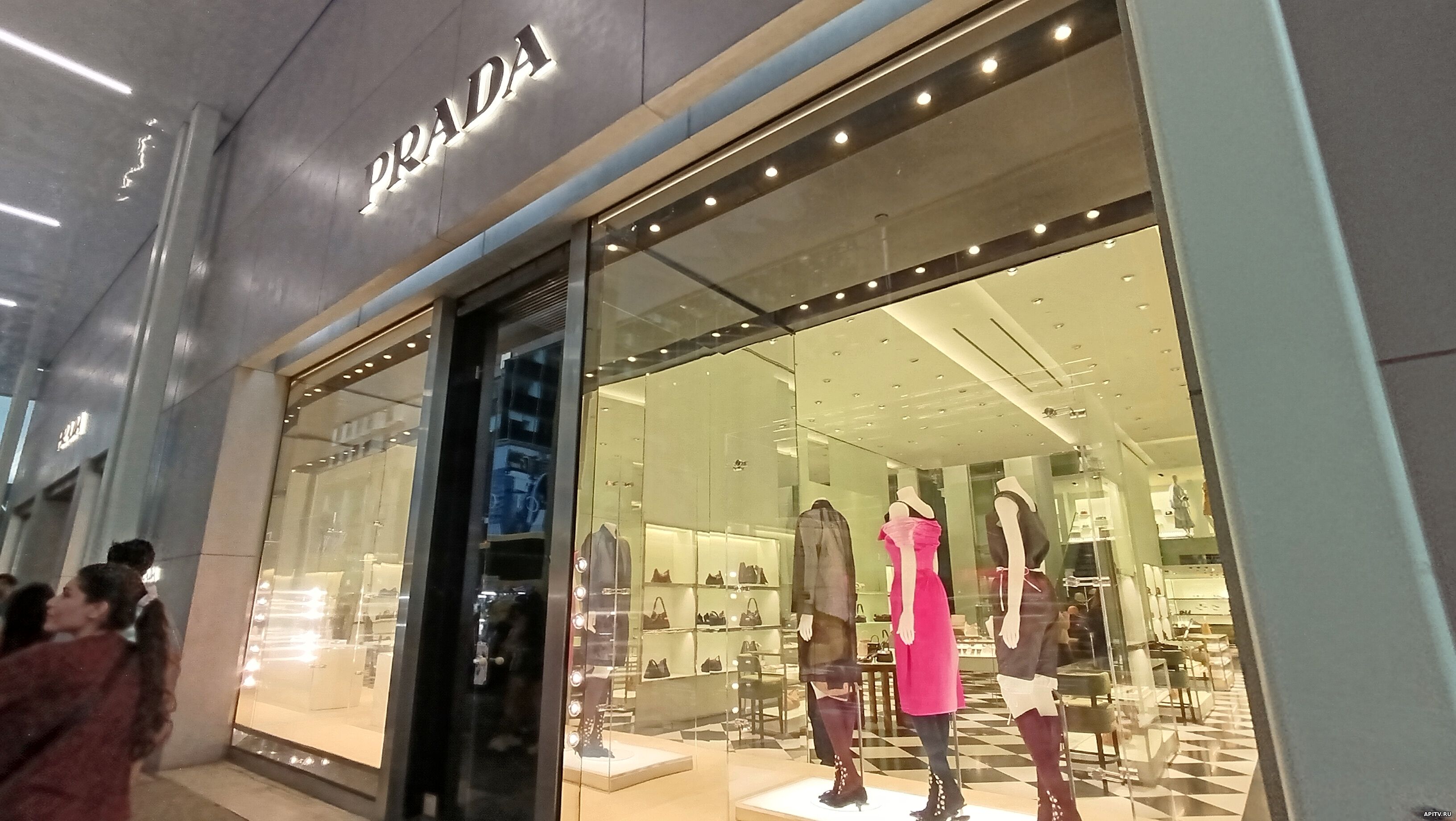
From Trunks to CatwalksThe story begins not with a dress, but with a suitcase. In 1913, brothers Mario and Martino Prada opened a shop in the Galleria Vittorio Emanuele II in Milan. They specialized in imported English steamer trunks, handbags, and exotic goods — silver, crystal, and tortoiseshell. The quality was so impeccable that in 1919, Prada became the Official Supplier to the Italian Royal House. This honor allowed them to display the House of Savoy's coat of arms (the knotted rope) in their logo — a subtle sign of aristocratic approval that still defines the brand today. Miuccia's RevolutionThe brand was run by the state for most of the 20th century until Miuccia Prada, Mario's granddaughter, took the reins. Holding a PhD in Political Science and a background in the Italian Communist Party, she wasn't a typical designer. In 1985, she introduced the world to the "Pocone" backpack — made of industrial nylon, black, and revolutionary. Thus, the aesthetic of "Ugly Chic" was born. The Global MachinePrada is not just a fashion house; it is a financial instrument.
Beyond the RunwayUnderstanding that fashion is fleeting, the brand aggressively diversified:
The View from Fifth AvenueWalking down Fifth Avenue and looking at the green marble, I realized that Prada and Trump Tower are two sides of the same coin. Both are family businesses that conquered the world. Both are symbols of power. But while Trump Tower screams its presence with gold and bronze, Prada whispers. It is the power of the intellectual elite. In a world of noise, a black nylon backpack speaks louder than a gilded door. David Polyakov (Special Correspondent for API TV from New York, USA) | |
|
| |
| Просмотров: 7907 | |