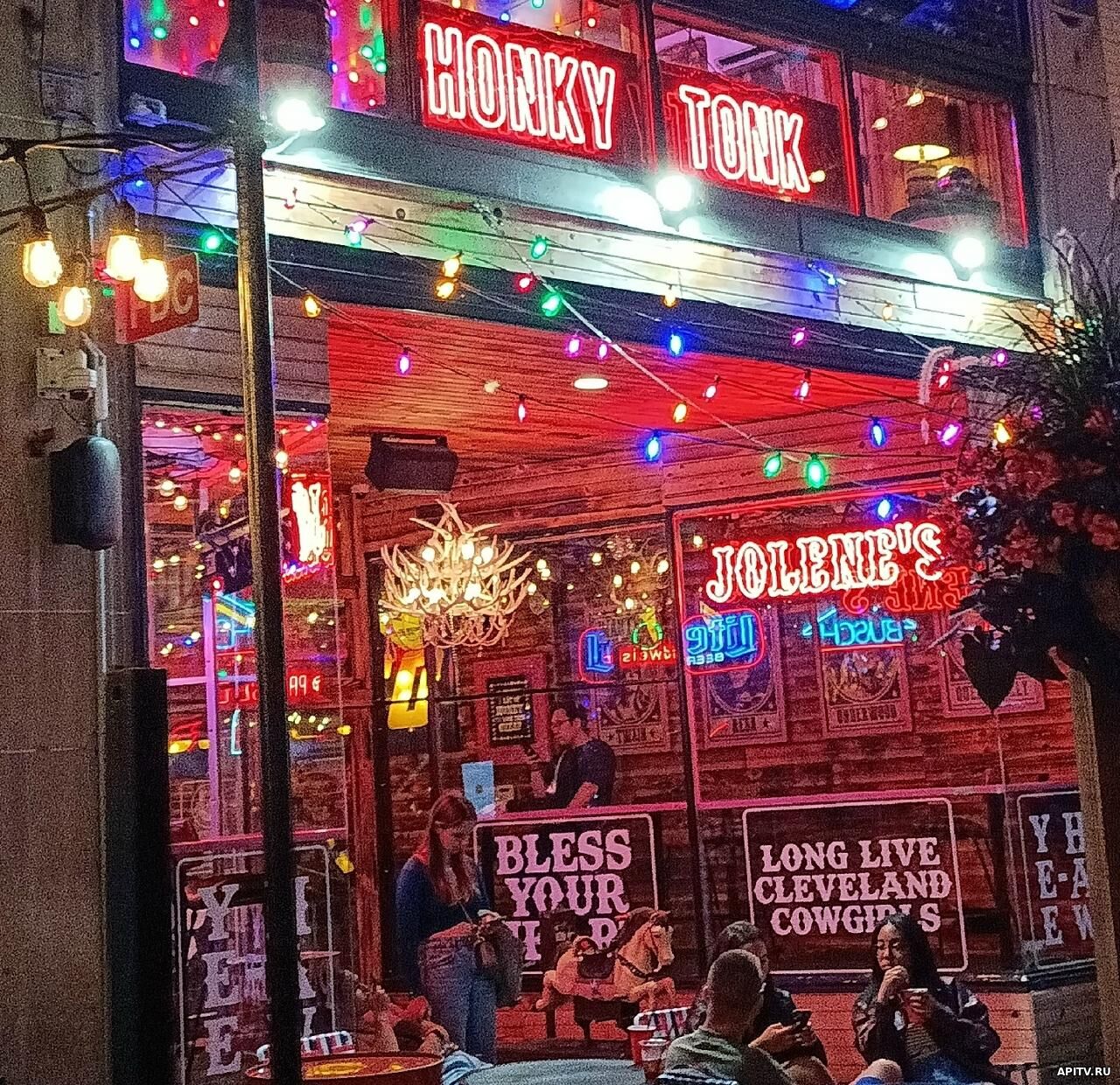
Even though we were in the heart of the Rust Belt, the name instantly transported me 1,000 miles south. It triggered a chain of cultural associations: George Strait's album "Honky Tonk Time Machine", the dusty roads of Texas and Oklahoma, and the voices of Alan Jackson and Tim McGraw. I even saw a reference to Dolly Parton's "Jolene" in the bar's name (Jolene's) and heard the echo of Lana Del Rey's "Henry, come on" in their slogan: "Long live Cleveland cowgirls." What is a Honky Tonk?The term Honky Tonk refers to either a bar that plays country music for entertainment or the specific genre of music played in such establishments. It can also refer to a type of upright piano (a "tack piano") often used in these venues. These joints are staples of the American South and Southwest. Many legends — including Hank Williams, Patsy Cline, and Merle Haggard — started their careers as amateurs playing in these smoky, beer-soaked rooms for tips. The Sound: From Broken Pianos to Rock 'n' RollThe history of the sound is as rough as the bars themselves.
The Culture: More Than Just MusicIn Texas, a Honky Tonk isn't just a bar; it's a social institution. As Texas historian Christian Wallace notes, these places are where "everything important to Texas culture happens: BBQ, beer, and dancing."
The Lyrics: The Poetry of PainHonky Tonk music is the blues of the working class. The lyrics are rarely happy. They focus on tragedy:
It is raw, nasal, and honest. Even The Rolling Stones paid tribute with their 1969 hit "Honky Tonk Women", which was based on the sound of 1940s Hank Williams and referenced the bars' reputation as centers of vice. Later, in the 1970s, the "Outlaw Country" movement (Waylon Jennings, Willie Nelson) brought that rough Honky Tonk edge back to Nashville. My ConclusionSeeing that sign in Cleveland was a cultural victory. It proved that while the factories of the Rust Belt closed, the spirit of the American Honky Tonk — resilient, a little sad, but always ready to dance — is alive, even on the shores of Lake Erie. David Polyakov (Special Correspondent for API TV from Cleveland, Ohio, USA) | |
|
| |
| Просмотров: 8511 | |