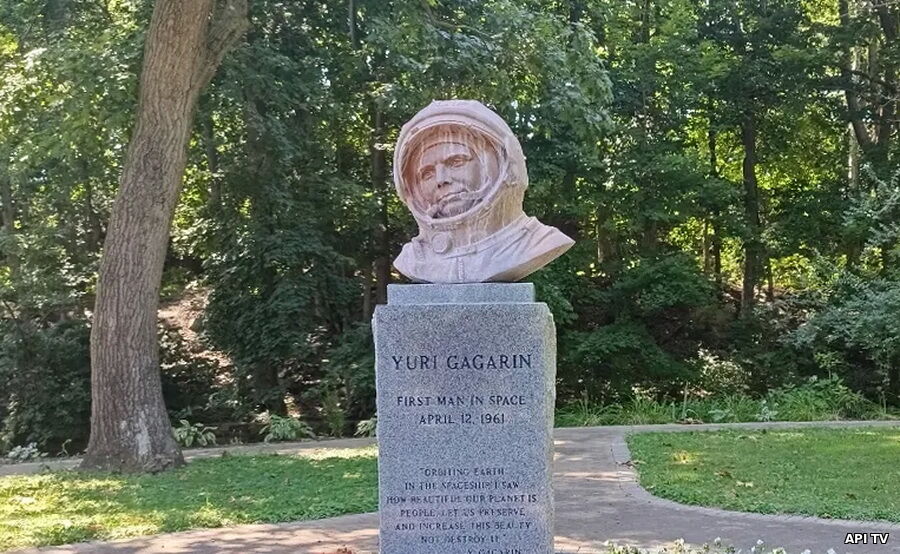
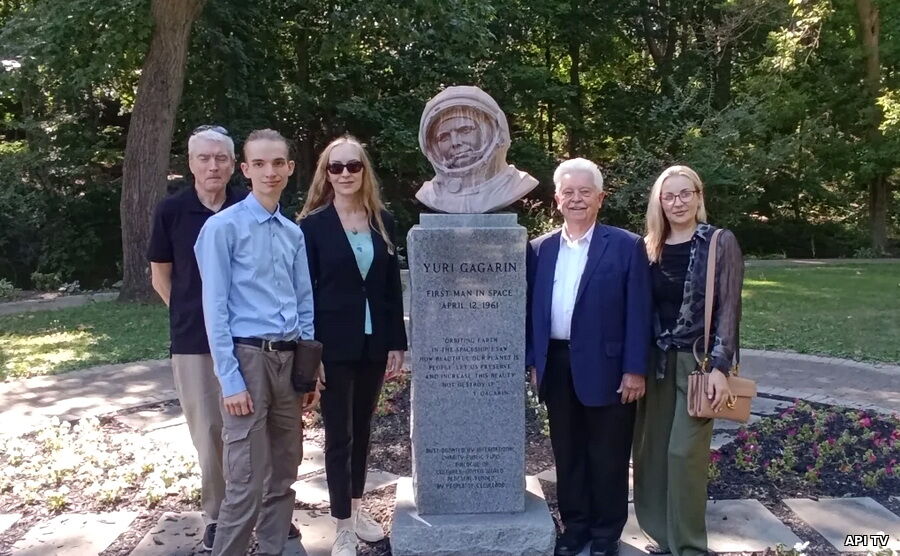
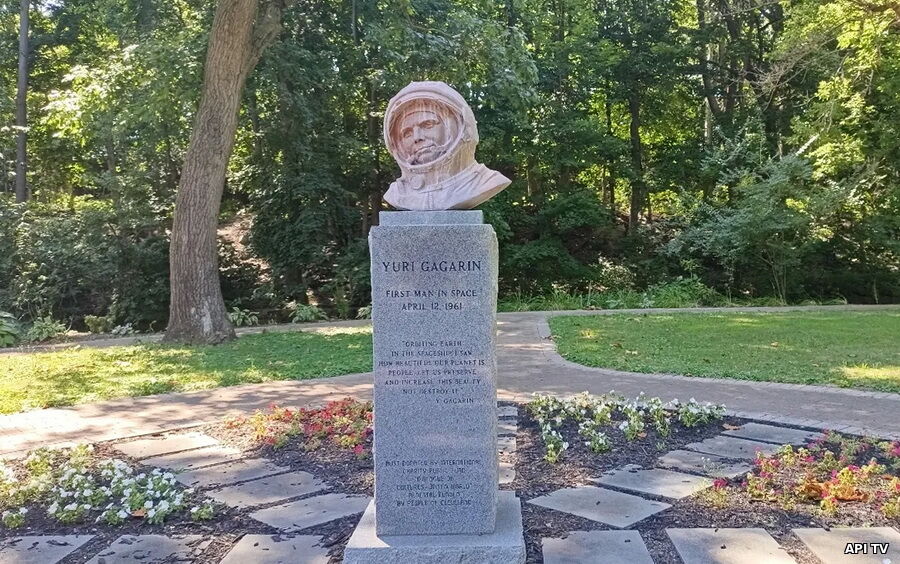
In the heart of an American city, where the steel skeletons of factories once set the rhythm of an industrial era, a very different story is being told today — the story of a flight. In the Russian Cultural Garden of Rockefeller Park in Cleveland, a bronze bust of Yuri Gagarin seems to be carrying on a silent dialogue with the city. And this dialogue isn’t about politics or competition; it’s about how a single moment — 108 minutes in space — became the shared heritage of all humankind.
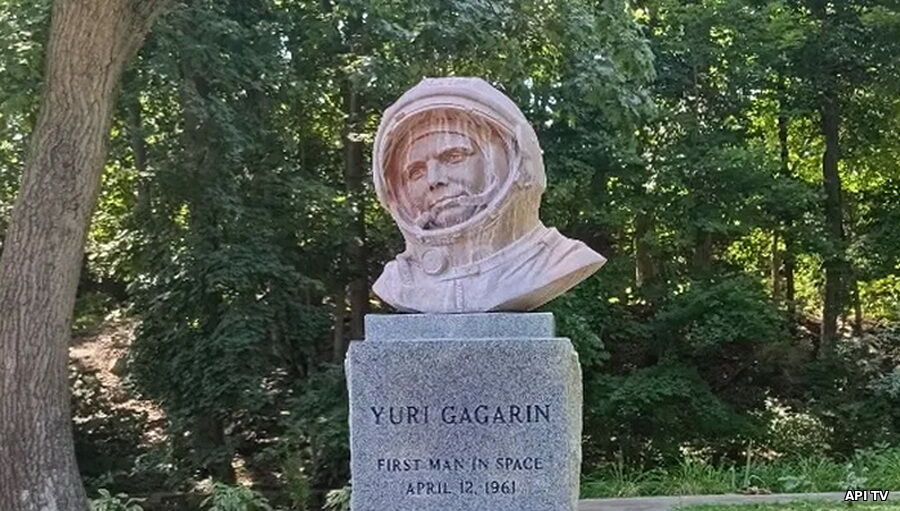
A Landmark in the Dialogue of Cultures The Russian Cultural Garden in Cleveland is more than just a park: it’s an entire system of ethnic and national gardens, part of a large project that has been shaped over decades by the efforts of the diaspora and local enthusiasts. Each garden here is like a page of history, carefully preserving names, traditions, and symbols of the peoples for whom America became a new home without erasing the memory of their roots. The Walk of Fame in the Russian Cultural Garden is a special place. It was here, on August 25, 2019, that the bronze bust of the planet’s first cosmonaut appeared. The location wasn’t chosen by chance: the garden has long served as a venue for events that connect the past and the present, Russia and America, science and art. The Birth of the Monument The author of the bust is sculptor Alexey Leonov. It’s important not to confuse him with the legendary cosmonaut Alexey Leonov: we’re talking about an artist who managed to capture in bronze not only Gagarin’s features but also that very expression — a slight smile that holds joy, wonder, and even a touch of mischief. Gagarin, depicted in a spacesuit helmet, doesn’t look like a formal bronze monument; he looks like a living person who has just returned from a flight and is ready to say, “Everything went well!” The bust was made in Zhukovsky, at the school of test pilots that the cosmonaut himself once graduated from. This detail adds extra meaning to the monument: it’s as if a circle has closed, and the place associated with training the conquerors of the sky has paid tribute to the one who first stepped beyond the atmosphere. The initiative to install the monument came from the international charitable foundation “Dialogue of Cultures — One World.” For the foundation, this isn’t an isolated project but part of a larger program: dozens of Gagarin monuments around the world are an attempt to speak a universal language that needs no translation. According to the creators, space itself is that language.
Opening Day: Words That Echoed Across the Walkway The opening ceremony on August 25, 2019, brought together representatives of different worlds: Cleveland’s city administration, the Russian diaspora, diplomats, journalists, and ordinary citizens. Among the honored guests was Cleveland Mayor Frank Jackson, a man for whom the city has always been a meeting place for diverse cultures. At the ceremony, a greeting from Anatoly Antonov, the Ambassador of the Russian Federation to the USA, was read aloud. It conveyed a simple yet powerful idea: the Gagarin monument is a sign of friendship between peoples, a reminder that great achievements belong not to one country but to all of humanity. On the pedestal is engraved Yuri Gagarin’s famous quote: “Having orbited the Earth in a spacecraft, I saw how beautiful our planet is. People, let us preserve and enhance this beauty, not destroy it.” These words ring especially poignant in an American park: they are addressed not to any single nation but to everyone who looks up and believes that the sky is not a boundary but the beginning of a journey.
Why Cleveland? Cleveland is a city with a rich industrial history, but in recent decades, it has increasingly revealed itself as a space of cultural diversity. The ethnic gardens in Rockefeller Park are a vivid confirmation of this. The Russian Cultural Garden became a natural place for a Gagarin monument: here, the history of Russia is presented not through loud slogans but through names, music, literature, and small architectural forms. Gagarin is perceived here not as a symbol of the Cold War era but as a hero of the age of discovery — a man who was the first to see the Earth as a whole and realize how fragile it is. In this sense, the monument works as a cultural bridge: it needs no explanation, because Gagarin’s smile is understandable in any language. The Monument as Part of a Global Project The “Dialogue of Cultures — One World” foundation views the Gagarin monuments as a series of messages to the future. Each bust or monument is not just a sculpture but a point of attraction for educational programs, meetings, and discussions. In Cleveland, such events take place regularly: guided tours for schoolchildren, lectures on cosmonautics, film screenings, and evenings of remembrance. For the local Russian‑speaking community, the monument has also become a place of memory: people bring flowers here on Cosmonautics Day and hold small ceremonies on commemorative dates. For Americans who visit the garden, it’s an opportunity to learn more about Russian culture and about Russia’s contribution to space exploration.
The Echo of the Flight Years after its unveiling, the monument in Cleveland remains more than a bronze figure — it’s a living element of the urban space. It reminds us that the most powerful symbols are those that speak of the human, not the political. Gagarin’s smile, frozen in bronze, continues to connect the shores of the ocean, reminding us that when we look at the stars, we’re all looking in the same direction. David Polyakov, Special Correspondent, API TV, Cleveland, USA. Photo by the author. ЕЩЁ ПО ТЕМЕ: Мост через космос: бронзовый Гагарин в Кливленде Давид Поляков: «Экспедиция «По Пути Афанасия Никитина» вдохновила меня на создание научных статей» Давид Поляков: «Cogito ergo sum. Мыслю, следовательно, существую» Давид Поляков: «Nihil est impossibile. Нет ничего невозможного!» Древние люди из Сунгиря. Экспедиция Андрея Полякова «По Пути Афанасия Никитина» #ДавидПоляков #USA #Clevelend #CIP #наука #Экспедиция #АндрейПоляков #APITV #ЭкспедицияАндреяПолякова #Путешествия #Туризм #Авто | |
|
| |
| Просмотров: 11759 | | |