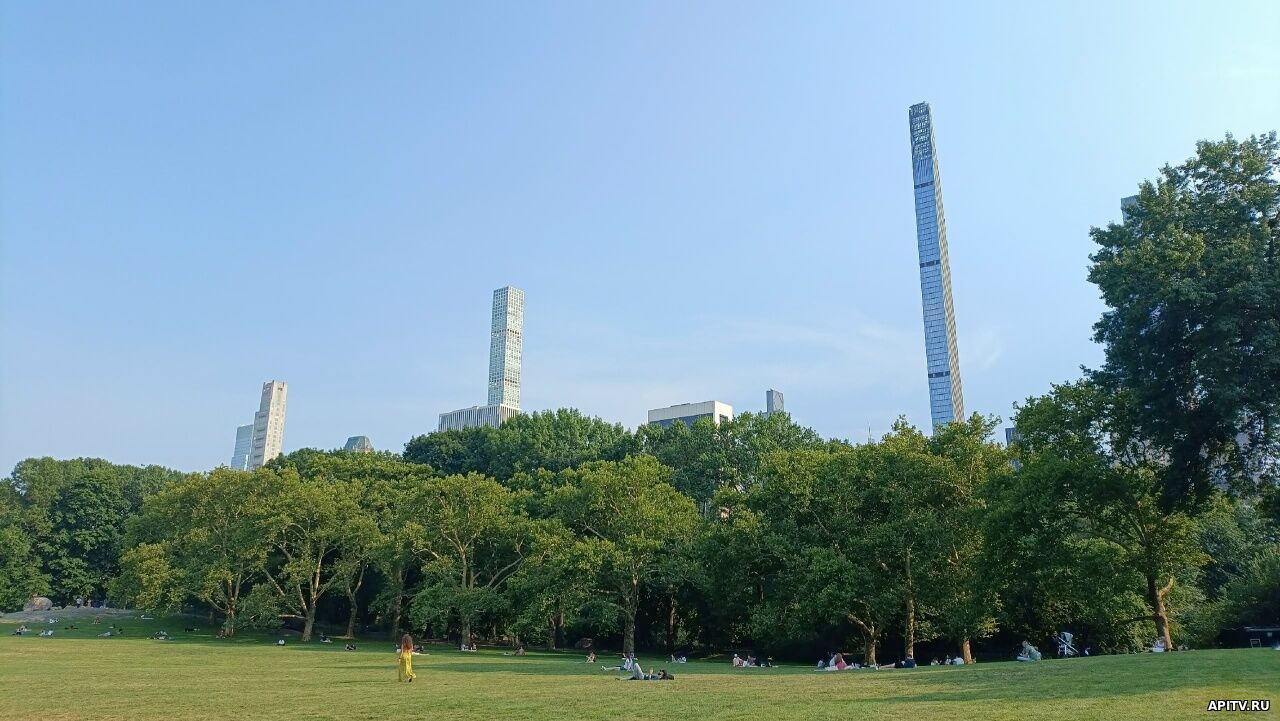
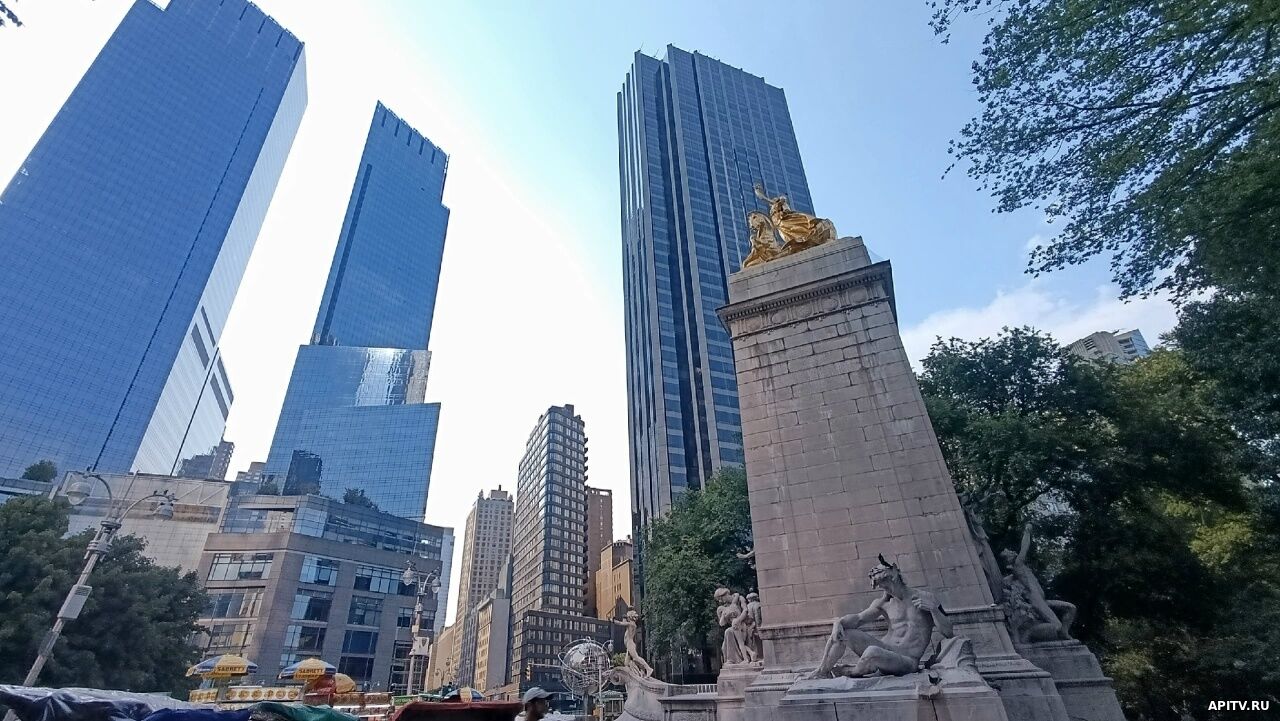
Central Park, the largest public project of its time, was designed by Frederick Law Olmsted and Calvert Vaux in 1857. Spanning 843 acres right in the heart of Manhattan, it remains a sanctuary where history and nature coexist. After long walks along Broadway and through Times Square, I finally reached the park. Suddenly, the scenery changed completely. Instead of an endless stream of expensive cars on the avenues, here horse-drawn carriages clip-clopped along the paths. The Architecture of Nature Olmsted and Vaux created a landscape that followed the traditions of English parks with their naturalistic landscapes. They brought in 14,000 cubic meters of topsoil from New Jersey and planted over 4 million trees and shrubs. The design included forests, winding streams, massive granite boulders, caves, grottos, and waterfalls. Ponds, gardens, and promenades were laid out across the terrain. Construction lasted from 1858 to 1873. This stylish gathering place for strolls — akin to the Bois de Boulogne in Paris or Hyde Park in London — quickly became popular among influential New Yorkers. In different periods, the park fell into decline, but in 1934, under the new mayor Fiorello La Guardia, its condition improved significantly. In 1975, the Central Park Conservancy was established, which continues to manage the territory under a contract with the NYC Department of Parks and Recreation.
A Chance Encounter in the Great LawnAs I walked across the Great Lawn, I heard music. Deciding to take a break after hours of walking with a heavy backpack on my back (which had started to ache), I made my way to the local amphitheater. I sat down on a bench near the stage and began watching the performance. It turned out to be a student group from Texas. When they finished singing, the choir director stepped forward to address the audience. His words struck me with their sincerity:
Before I could even stand up, members of the chorus ran up to me. They suggested we pray together. We stood in a circle, held hands, and each person voiced their gratitude to Providence for today's day and our meeting. I told them about my experiences visiting Orthodox monasteries in Russia. The girls were genuinely surprised to learn I was Russian; they confessed they had mistaken me for a local resident. ConvergenceIn this place, amidst the vast metropolis, borders between countries blurred. On that bench in Central Park, Texas, Moscow, and Ohio ended up very close together. David Polyakov (Special Correspondent for API TV from New York, USA) MORE: Sherman on Fifth Avenue: Triumph and the Shadow of the Civil War Odyssey of the Rust Belt: A Visit to Barons Bus Greyhound Lines: How I Swapped a Plane for an Intercity Bus First night in New York: not on Broadway, but on Busway White Among Blacks, Rich Among Poor: Survival in One of America's Dangerous Cities JFK — Manhattan: My First Steps in the USA Rockefeller Center: The Steel Flower of the Great Depression Cleveland: Where an Empire Was Born. The Story of Standard Oil and John D. Rockefeller Akron, "All-America City 2025": One Year After the Triumph Древние люди из Сунгиря. Экспедиция Андрея Полякова «По Пути Афанасия Никитина» #ДавидПоляков #USA #Clevelend #CIP #наука #Экспедиция #АндрейПоляков #APITV #ЭкспедицияАндреяПолякова #Путешествия #Туризм #Авто | |
|
| |
| Просмотров: 8339 | |