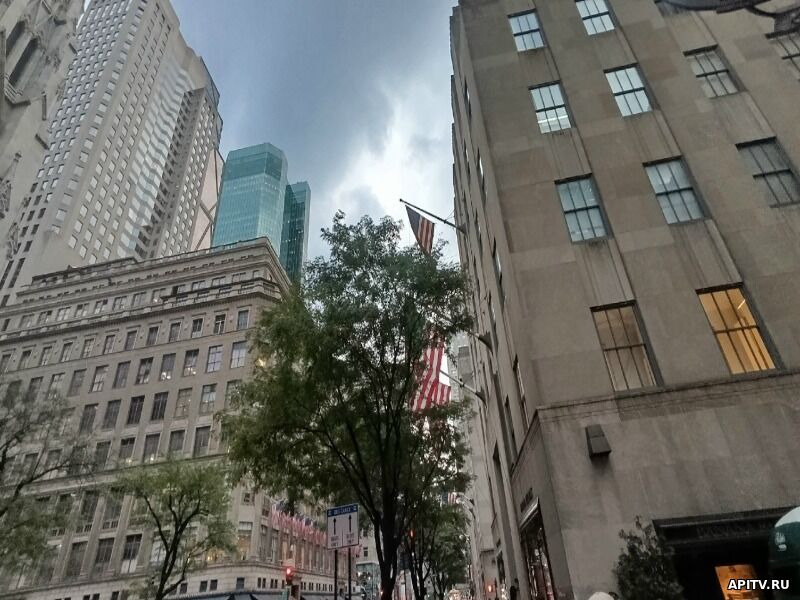
Rockefeller Center is a monument to the ambitions of John D. Rockefeller Jr., erected during one of the most severe crises in human history.
From Botanical Gardens to Media Empire
The first private owner of this plot was Dr. David Hosack, who in 1801 purchased twenty acres of rural land from New York City and established the nation's first public botanical garden there — the Elgin Botanic Garden. The gardens existed until 1811, and by 1823, the territory had passed into the ownership of Columbia University. Columbia held this land as an investment, and by 1896, it moved its main campus 60 blocks north to Morningside Heights in Upper Manhattan.
In 1926, the Metropolitan Opera began searching for a location for a new opera house to replace its building on 39th Street and Broadway. By 1928, Benjamin Wistar Morris and designer Joseph Urban were hired to draft the blueprints. However, construction would have been too expensive for the Met, and eventually, John D. Rockefeller Jr. was persuaded to support the project. To assess the viability, Rockefeller hired Todd, Robertson and Todd as design consultants. John R. Todd proposed a "Metropolitan Square" concept. Columbia leased the site to Rockefeller for 87 years at $3 million per year, excluding certain properties on Fifth Avenue and a parcel on Sixth Avenue.
Initial costs for acquiring the lots, demolishing existing structures, and erecting new ones were estimated at $250 million.
Following the Stock Market Crash of 1929, the Metropolitan Opera could no longer afford the move, and plans were officially canceled on December 6, 1929. Rockefeller quickly entered negotiations with the Radio Corporation of America (RCA) and its subsidiaries, National Broadcasting Company (NBC) and Radio-Keith-Orpheum (RKO). By May 1930, he convinced them to build an entertainment complex with a media center on the site.
Junior Rockefeller took a colossal risk. Using his own funds (approximately $100 million—a gigantic sum for that time), he decided to create a "city within a city": a complex of 14 buildings unified by a single architectural style and underground concourse level.
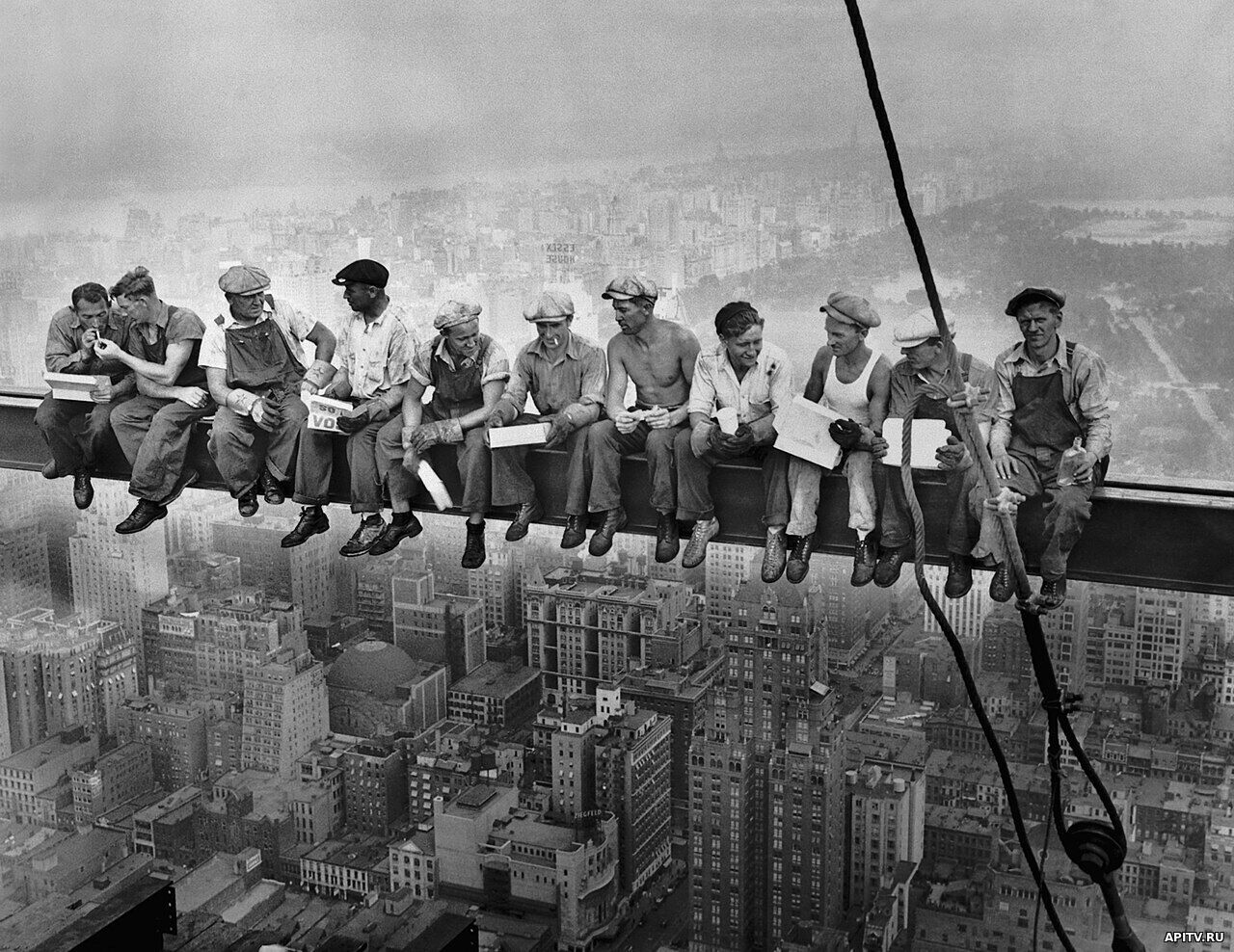
Construction began in 1930, when a quarter of Americans were unemployed. Erecting skyscrapers amidst an economic apocalypse was perceived by contemporaries as either madness or a miracle.
Architecture of Optimism (Art Deco)
The Center became the benchmark for the Art Deco style. Unlike the grim brick of Akron's factories, here reigns limestone, bronze, and stainless steel.
- Symmetry and Order: For someone who has survived the chaos of broken buses and logistical breakdowns, this center looks like the embodiment of absolute control over matter.
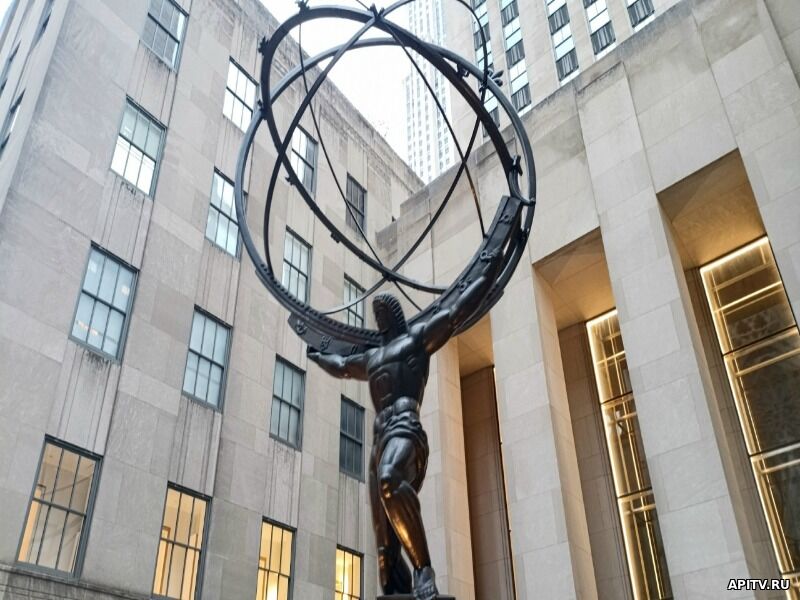
- The Book of Law: On the facade of the GE Building (formerly RCA) stands the iconic bas-relief "Wisdom," where Atlas holds aloft the celestial sphere under the watchful eye of Hermes. The words below read: "Progress and Harmony of Science, Art and Industry are the fruit of Wisdom."
Radio City and Human Robots
The most famous building in the complex is Radio City Music Hall, which opened in 1932. Thousands worked on the construction site. To feed their families, they agreed to meager wages. Legends persist (though historians dispute them) that during the installation of the famous golden statue of Prometheus above the ice rink, workers earned only a few dollars a day but were grateful simply for the opportunity to work.
It was here that the concept of mass entertainment industry was born. The famous Rockettes—dancing girls whose movements are synchronized to the millimeter—became a symbol of American standardization of beauty, just as Standard Oil was a symbol of standardized oil.
Innovations of the 20th Century
Rockefeller Center was a technological marvel of its time:
- The first skyscraper with air conditioning: The building was designed so people would be comfortable even during sweltering New York summers.
- Underground City: A unified network of shops and restaurants beneath the street level, allowing movement between towers without going outside.
- Avenue of the Americas: The complex prompted the renaming of part of Sixth Avenue to honor Pan-American ideals, emphasizing US geopolitical influence.
- View from Above: Top of the Rock vs. Empire State Building. For a traveler, choosing an observation deck is a question of philosophy. The Empire State Building offers a view of the loneliness of the king. Top of the Rock (the summit of the main GE/Rockefeller building) offers the best possible view of the Empire State Building itself.
Philosophy of Legacy
John D. Rockefeller Jr. built this center not solely for profit. He believed that business must create an environment for culture. This is why the plaza features Paul Manship’s famous sculpture "Prometheus," bringing fire to humanity.
In 1989, Mitsubishi Estate, a real estate management company within the Mitsubishi Group, acquired the Rockefeller Group.
In 2000, Tishman Speyer and the Crown family of Chicago finally repurchased the Rockefeller Center for $1.85 billion.
David Polyakov (Special Correspondent for API TV from New York, USA)
MORE:
Cleveland: Where an Empire Was Born. The Story of Standard Oil and John D. Rockefeller
Akron, "All-America City 2025": One Year After the Triumph
Arctic Campaign Memorial in Portland: Remembering the Arctic Convoys and the Threads of Sister‑City Ties
Cleveland Marks the 70th Anniversary of the Council for International Programs (CIP)
A Bridge Across Space: How a Bronze Gagarin Spoke to Cleveland
70 Years of Bridges of Friendship: Cleveland CIP Jubilee to Feature Sister Cities Project with Russian Delegation Participation
Древние люди из Сунгиря. Экспедиция Андрея Полякова «По Пути Афанасия Никитина»
#ДавидПоляков #USA #Clevelend #CIP #наука #Экспедиция #АндрейПоляков #APITV #ЭкспедицияАндреяПолякова #Путешествия #Туризм #Авто |