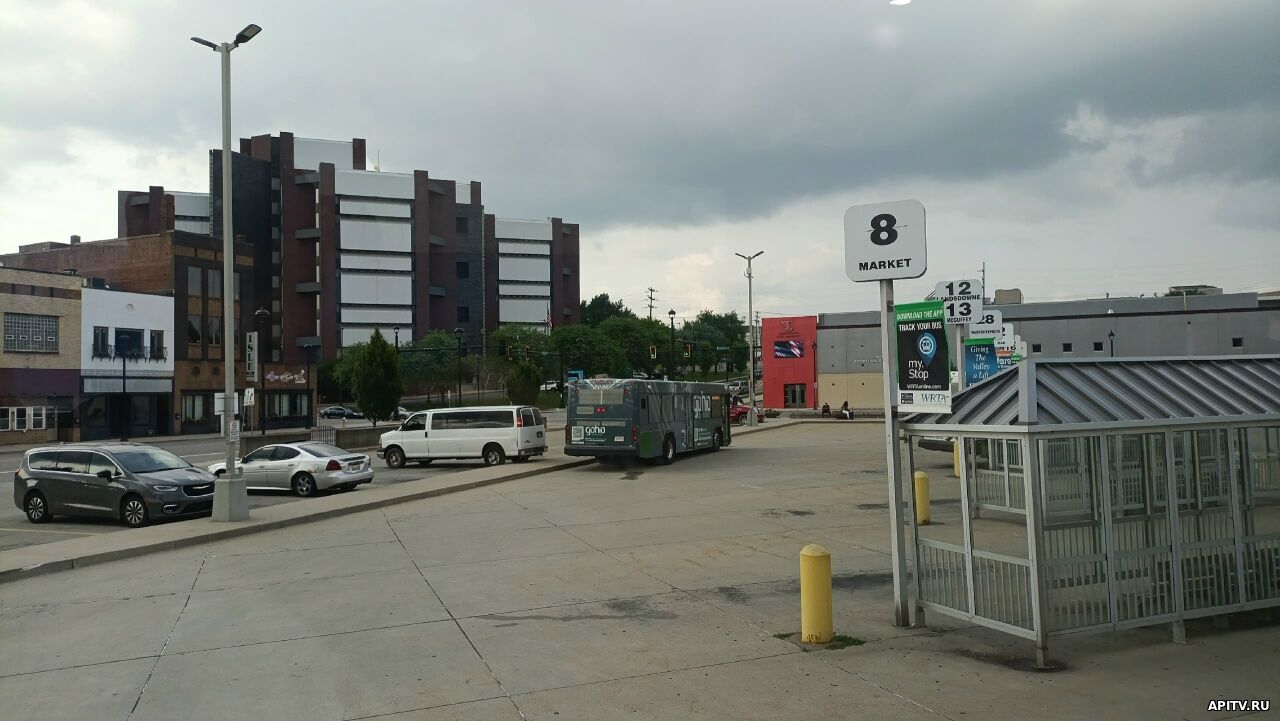
History Written in SteelThe city was founded by pioneer John Young in 1797. He purchased 15,560 acres of land from the Connecticut Western Reserve for just $16,085, and the settlement was officially registered in 1802. The discovery of coal deposits in the early 19th century changed everything. With the completion of the Erie Canal extension, the Mahoning Valley entered the nation's industrial network. In 1847, the Brier Hill furnace opened, giving birth to the Brier Hill Iron & Coal Company. The arrival of the railroad in 1856 finally cemented the city's status as a titan of heavy industry. By the early 20th century, Youngstown was booming so hard it was considered a model of the American Dream. In 1950, it even earned the prestigious All-America City Award — an honor given by the National Civic League for constructive civic engagement. The Fall: When the Furnaces Went ColdBut then came 1977 — the year the music died for the Rust Belt. The corporation Youngstown Sheet and Tube announced the closure of the massive Campbell Works plant. Within five years, the city lost 50,000 jobs. It wasn't just an economic failure; it was a cultural shockwave. Youngstown changed not just because of market failures, but due to deep psychological trauma. This wasn't just about losing money; it was about losing identity. A place designed to produce steel suddenly had no purpose. Rebirth through Acceptance (Youngstown 2010)Instead of denying reality, the city did something radical. In partnership with Youngstown State University, the government launched the ambitious urban renewal plan called "Youngstown 2010." Unlike other cities pretending they would return to their former glory, Y-town decided to accept "shrinkage" (Smart Decline). They hired Canadian company Urban Strategies Inc. to create a masterplan based on public consultations. The goals were simple yet brutal:
In 2007, this project won a national award for community planning from the American Planning Association. My Impression: Passing Through the RuinsMy visit lasted only minutes — a bus layover between Buffalo and Cleveland. I looked at the blackened skeletons of the mills against the gray Ohio sky. There is a specific melancholy here that you don't feel in Boston or Manhattan. It is the silence after the blast. While Akron celebrates being named an All-America City again in 2025 for its eco-efforts, Youngstown feels like a veteran soldier who has seen too much war to celebrate small victories easily. Yet, there is dignity in these ruins. Like the heroes of Dreiser's novels we discussed earlier, Youngstown refuses to die quietly. It redefines itself, turning empty lots into gardens. I left Youngstown looking at the rust-colored hills flashing past the window, heading east toward civilization. Sometimes the most important lessons are learned not where monuments shine, but where chimneys have stopped smoking. David Polyakov (Special Correspondent for API TV from Youngstown, Ohio, USA) MORE: Sherman on Fifth Avenue: Triumph and the Shadow of the Civil War Odyssey of the Rust Belt: A Visit to Barons Bus Greyhound Lines: How I Swapped a Plane for an Intercity Bus First night in New York: not on Broadway, but on Busway White Among Blacks, Rich Among Poor: Survival in One of America's Dangerous Cities JFK — Manhattan: My First Steps in the USA Rockefeller Center: The Steel Flower of the Great Depression Cleveland: Where an Empire Was Born. The Story of Standard Oil and John D. Rockefeller Akron, "All-America City 2025": One Year After the Triumph Древние люди из Сунгиря. Экспедиция Андрея Полякова «По Пути Афанасия Никитина» #ДавидПоляков #USA #Clevelend #CIP #наука #Экспедиция #АндрейПоляков #APITV #ЭкспедицияАндреяПолякова #Путешествия #Туризм #Авто | |
|
| |
| Просмотров: 5686 | |